2026-01-12
Overview
By 2026, diagnostic imaging centers are facing record patient volumes while teleradiology has become the default operating model. In this environment, the traditional separation between RIS and PACS is no longer practical.
Operating a competitive diagnostic center today requires more than clinical expertise-it demands a unified digital infrastructure. Understanding how RIS and PACS work together is now essential for operational efficiency, faster diagnosis, and long-term business sustainability.
Understanding the Traditional RIS & PACS Model
To appreciate the power of a combined RIS PACS solution, we must first look at how these systems functioned separately.
Radiology Information System (RIS)
The RIS functions as the administrative backbone of the radiology department, managing patient workflow and business operations.
- Patient Registration & Scheduling
- Billing & Insurance Verification
- Report Creation & Distribution
The primary goal of RIS is to coordinate the patient journey while ensuring smooth operational and financial management.
Picture Archiving and Communication System (PACS)
PACS serves as the clinical imaging core, responsible for handling diagnostic images.
- Storage of DICOM Images: X-ray, CT, MRI, Ultrasound
- Image Retrieval: Access to current and prior studies
- Diagnostic Viewing Tools: Used by radiologists for interpretation
Its goal is to deliver accurate, high-quality clinical data for diagnosis.
Challenges with Legacy Separate Systems
For years, RIS and PACS operated as independent systems, creating massive inefficiencies across radiology departments.
- Duplicate Data Entry: Patient information entered multiple times into both the RIS and the PACS.
- Higher Error Rates: Increased risk of mismatched or incorrect demographic data.
- Slower Turnaround Time (TAT): Switching between systems delays reporting.
- Operational Overhead: Multiple servers, vendors, and support contracts to maintain.
The Rise of Unified RIS PACS Platforms
In 2026, the industry standard has shifted toward Unified RIS PACS platforms-single, integrated software architectures where clinical images and administrative data coexist seamlessly.
1. AI-Driven Workflow Automation
Modern unified RIS PACS solutions actively optimize workflows rather than simply storing data.
- RIS Intelligence: Predicts no-shows and optimizes appointment slots
- PACS AI Triage: Automatically prioritizes critical cases such as stroke or brain hemorrhage directly on the worklist.
2. Single Window for Radiologists
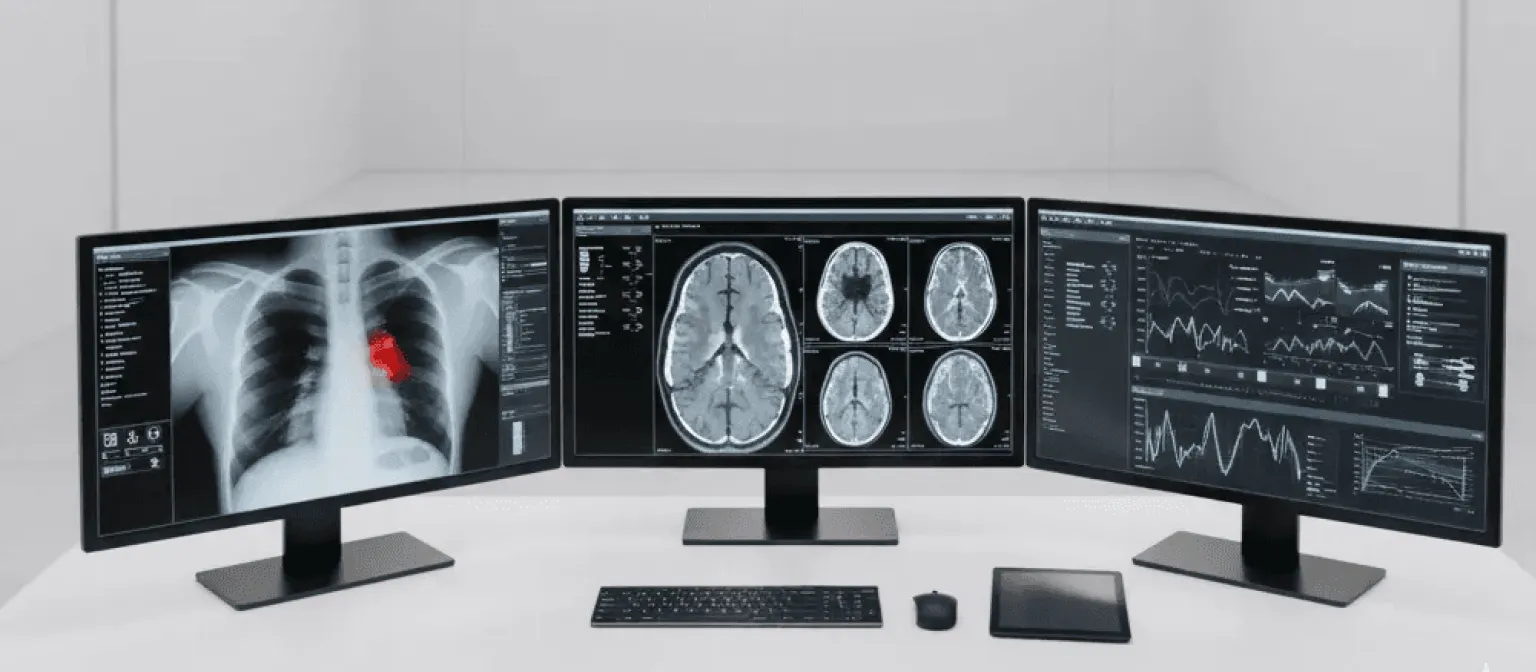
With an integrated RIS PACS, radiologists can access patient history, prior reports, lab notes, and diagnostic images within a single interface. Voice dictation and reporting are embedded directly into the viewer, enabling instant report availability for referring physicians without switching screens.
3. Teleradiology-Native Architecture
Unified RIS PACS platforms are built for remote access. Web-based, zero-footprint viewers allow radiologists to securely report from home or remote locations without compromising image quality or performance.
Comparison: Separate vs Unified RIS PACS
| Feature | Traditional Separate Systems | Unified RIS PACS Platform |
|---|---|---|
| Data Entry | Duplicate entries, higher error risk | Single-entry workflow |
| User Interface | Multiple logins and systems | Single unified dashboard |
| Reporting | Separate viewing and reporting tools | Integrated reporting within viewer |
| Maintenance | Multiple vendors and servers | One vendor, simplified IT |
| Cost | Higher operational overhead | Lower Total Cost of Ownership (TCO) |
What to Look for in a RIS PACS Solution in 2026
- Zero-Footprint Viewer: Browser-based access without installations
- Vendor Neutrality: Compatibility with all major imaging modalities and EMRs
- Hybrid Cloud Capability: Local performance with secure cloud backup
Conclusion
The debate of RIS versus PACS is no longer relevant. In 2026, integration is the clear winner.
Unified platforms such as Everrtech's NeoRad Fusion enable diagnostic centers to operate faster, reduce errors, support teleradiology, and improve patient outcomes. Investing in a unified RIS PACS ecosystem is not just a technology upgrade-it is a strategic move toward a smarter, more profitable healthcare operation.


