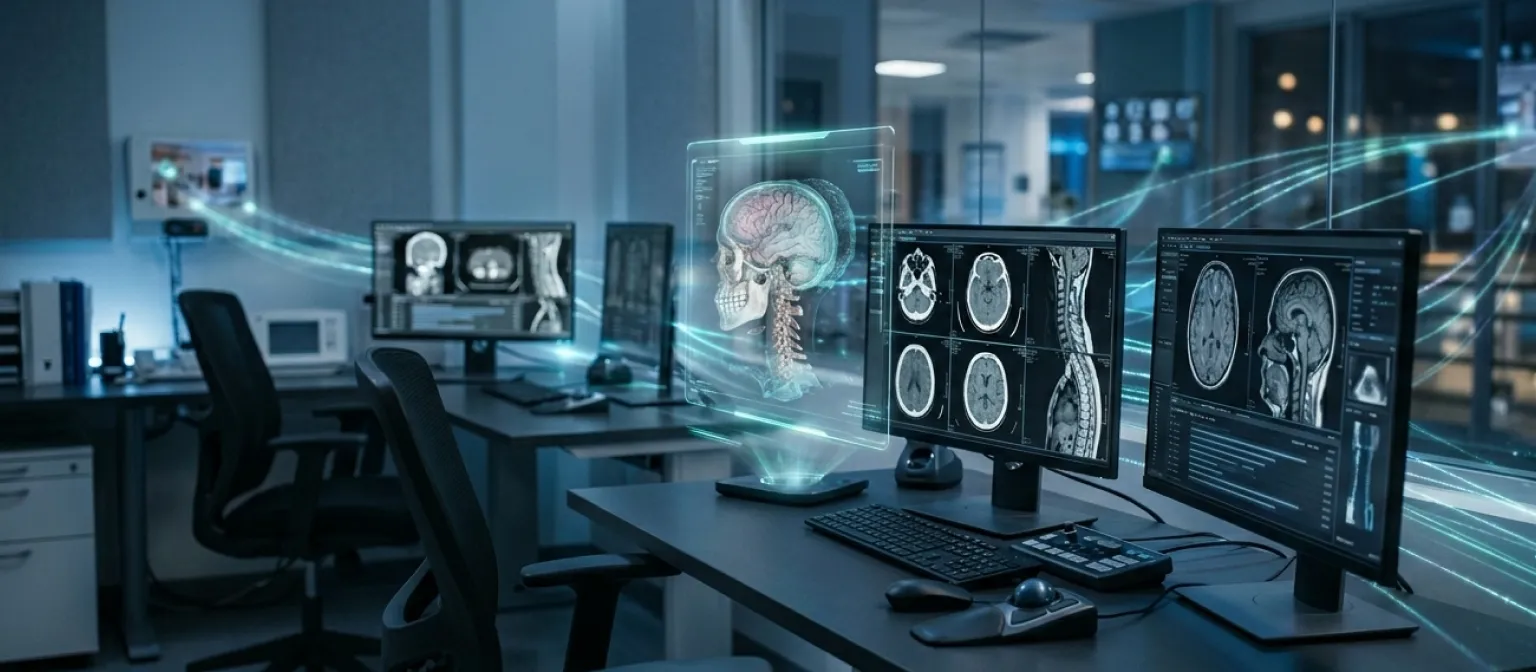
Teleradiology Solutions in 2026: How Remote Diagnosis Is Making Healthcare Faster and Smarter
What if a CT scan taken in a rural clinic could reach a specialist radiologist and return a report in under 30 minutes - without anyone travelling? In 2026, that is not a vision of the future; it is exactly what modern teleradiology solutions make possible every single day.
From radiologist shortages in tier-2 cities to the growing pressure on emergency departments, the healthcare system needs faster, smarter diagnostic pathways. Teleradiology is delivering exactly that - and the hospitals adopting it early are pulling ahead.
1. What Is Teleradiology - and Why Is Everyone Talking About It?
Radiology without borders
Teleradiology is the transmission of medical images - X-rays, CT scans, MRIs, ultrasounds - from one location to another for remote interpretation by a qualified radiologist. Think of it like video calling, but for diagnostic images: the scan stays where it was taken; the expertise travels instantly.
A patient in a small district hospital gets the same specialist read as someone in a major city hospital. That equity of access is what has made teleradiology one of the fastest-growing segments in digital healthcare.
2. The Demand Driving Rapid Adoption
The numbers behind the shortage
One radiologist. A hundred thousand people. That's India's current ratio, and honestly, it tells you everything you need to know about why teleradiology took off the way it did.
Walk into a district hospital two hours outside any major city and ask who reads the CT scans. A lot of the time, the answer is complicated - a visiting doctor, a part-time arrangement, or reports sent out and waited on. It's a system under real strain, and it has been for years.
The WHO's global figure sits at 4.3 million missing health workers. Radiologists are a small but critical slice of that number. And the uncomfortable part? Scan demand isn't waiting for the supply to catch up. Cardiology, oncology, emergency medicine - all of them now rely on imaging at nearly every decision point.
3. How Teleradiology Works: From Scan to Report in Minutes
A seamless five-step digital workflow
- Image acquisition - X-ray, CT, or MRI is performed at the point of care.
- DICOM upload - images are sent to a cloud-based PACS.
- Secure transmission - end-to-end encrypted delivery to the remote radiologist.
- Remote interpretation - zero-footprint viewer or workstation.
- Report delivery - structured report sent within 15–60 minutes.
Integration with a Radiology Information System (RIS) ties the entire process - patient registration, worklist management, reporting, and billing - into one connected digital workflow.
4. Key Features That Separate Good Platforms From Great Ones
AI, cloud PACS, and security that meets global standards
- AI-assisted detection
- Zero-footprint cloud access
- Fast, lossless image transfer
- Compliance-grade security
5. Real Benefits for Hospitals, Clinics, and Diagnostic Centers
Reports that used to take hours come back in minutes. Smaller clinics get access they couldn't afford before. Larger hospitals get flexibility they didn't have before.
6. Common Challenges - and How to Overcome Them
- Security: AES-256 encryption and role-based access control
- Bandwidth: Intelligent compression
- Integration: DICOM, HL7, FHIR standards
7. Why Everrtech Is Trusted by 500+ Cloud Customers Across 25+ Countries
Everrtech has been developing medical imaging software since 1998 - giving it over 25 years of domain knowledge that few competitors can match.
If your hospital or diagnostic center is ready to reduce turnaround times, expand specialist access, and build a more resilient radiology operation, Everrtech's teleradiology solutions are worth a closer look.


